
We need to futureproof healthcare facilities and NHS estates or face increasing pressure to evolve with new technologies, changing regulations and growing patient demands. As the healthcare landscape shifts, facilities managers must plan for the future by ensuring spaces are adaptable for tomorrow.
This blog will explore the importance of futureproofing healthcare estates, discuss the role of modular interiors and explain how our solutions can help healthcare providers meet current and future needs.
Healthcare spaces are constantly under pressure to adapt to evolving patient needs, medical technologies and staffing requirements. The COVID-19 pandemic further highlighted the need for flexible healthcare spaces that can quickly adapt to surges in demand or changes in care delivery.
However, many existing healthcare spaces were not designed with adaptability in mind. Traditional construction often leads to rigid layouts, costly maintenance, and limited scalability. Without a long-term approach, hospitals risk becoming inefficient and outdated faster than expected.
Futureproof healthcare facilities mean designing spaces that can evolve without the need for costly and disruptive renovations. It involves creating environments flexible enough to accommodate new technologies, meet shifting patient needs and comply with changing regulations; all without damaging and sending existing materials straight to landfill.
For facilities managers, this means considering long-term sustainability, low-maintenance materials and designs that allow spaces to be easily reconfigured as needed.
Creating futureproof healthcare facilities requires a combination of smart planning, durable materials and adaptable infrastructure. Modular interiors meet all these criteria by allowing hospitals to grow and adjust with minimal downtime. Some key benefits include:
Facilities managers are tasked with managing the long-term maintenance of healthcare estates. Futureproof healthcare facilities require materials that:
Architectural Wallsz addresses this challenge with low-maintenance materials designed for durability and longevity. Our modular systems incorporate materials that withstand demanding environments, from high-traffic areas to infection-prone zones. Additionally, our removable panels allow easy maintenance as they allow quick access to the wall cavity, letting staff carry out the work they need without disrupting the facility.
To remain efficient, these facilities must be designed to adapt without disruptive reconstruction. Futureproof healthcare facilities use modular systems, allowing quick upgrades and reconfigurations and ensuring patient care isn’t impeded.
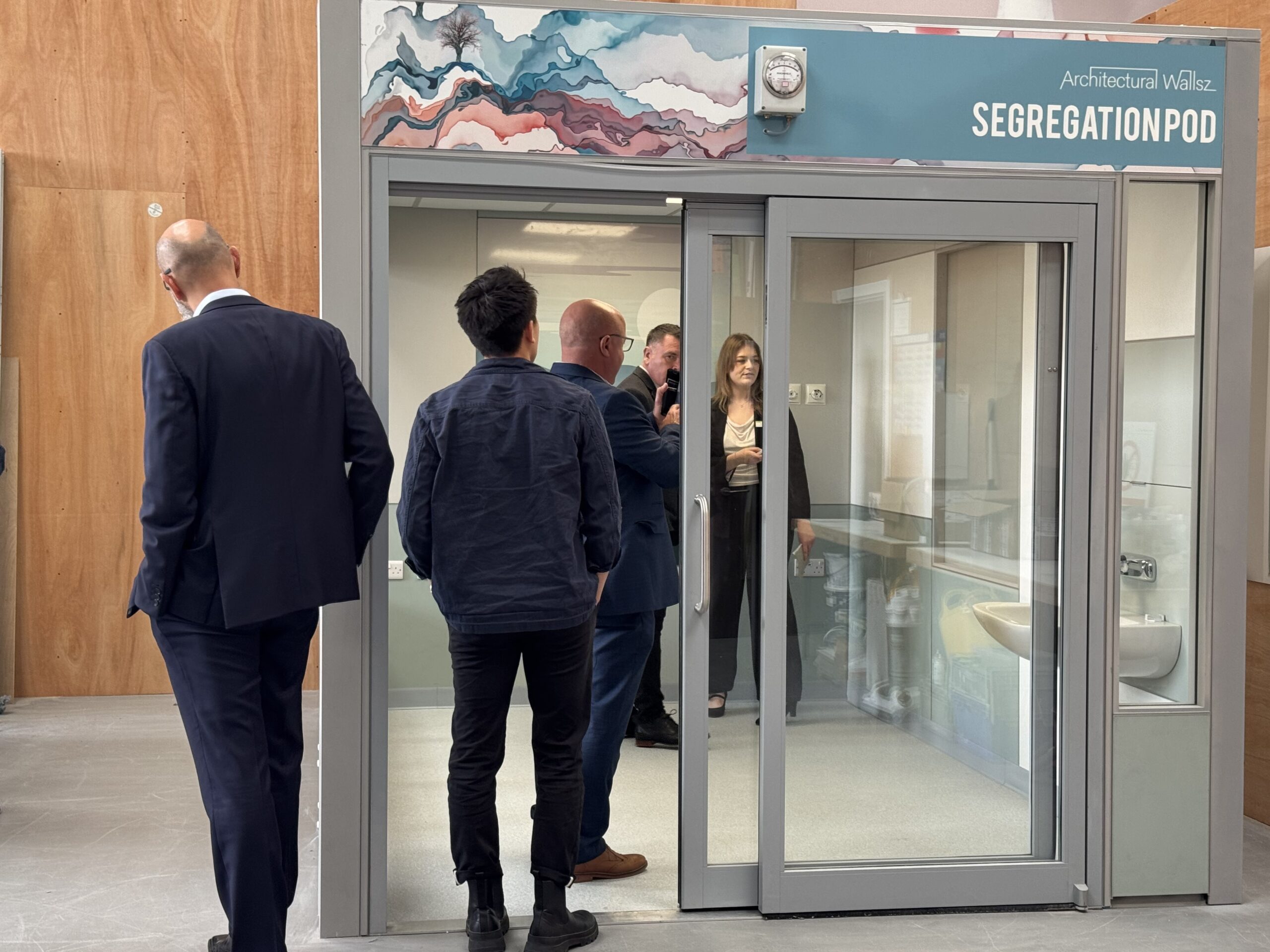
For instance, if a hospital needs to expand its ICU capacity, modular walls can be installed to create new rooms with minimal impact on existing operations. Similarly, if the facility needs to incorporate new diagnostic equipment or adjust the layout of patient rooms, modular components can be quickly modified to meet these needs.
Sustainability is a core part of future-proofing healthcare facilities. Energy-efficient systems, low-emission materials and eco-friendly designs are essential.
Our modular systems are designed with materials that are not only durable but also environmentally responsible. By incorporating energy-efficient technologies, such as low-energy lighting, optimised HVAC systems, eco-friendly finishes, and recycled denim insulation – Architectural Wallsz helps healthcare facilities meet sustainability goals without sacrificing performance or patient care.
As healthcare demands continue to evolve, the environments where care is delivered must evolve too. Futureproof healthcare facilities require a forward-thinking approach to design that integrates flexibility, sustainability and low-maintenance solutions.
By integrating systems such as modular walls, prefabricated rooms and other future-ready solutions, we help healthcare providers deliver high-quality care while ensuring their facilities are adaptable and cost-effective.
We need to futureproof healthcare facilities and NHS estates or face increasing pressure to evolve with new technologies, changing regulations and growing patient demands. As the healthcare landscape shifts, facilities managers must plan for the future by ensuring spaces are adaptable for tomorrow.
This blog will explore the importance of futureproofing healthcare estates, discuss the role of modular interiors and explain how our solutions can help healthcare providers meet current and future needs.
Healthcare spaces are constantly under pressure to adapt to evolving patient needs, medical technologies and staffing requirements. The COVID-19 pandemic further highlighted the need for flexible healthcare spaces that can quickly adapt to surges in demand or changes in care delivery.
However, many existing healthcare spaces were not designed with adaptability in mind. Traditional construction often leads to rigid layouts, costly maintenance, and limited scalability. Without a long-term approach, hospitals risk becoming inefficient and outdated faster than expected.
Futureproof healthcare facilities mean designing spaces that can evolve without the need for costly and disruptive renovations. It involves creating environments flexible enough to accommodate new technologies, meet shifting patient needs and comply with changing regulations; all without damaging and sending existing materials straight to landfill.
For facilities managers, this means considering long-term sustainability, low-maintenance materials and designs that allow spaces to be easily reconfigured as needed.
Creating futureproof healthcare facilities requires a combination of smart planning, durable materials and adaptable infrastructure. Modular interiors meet all these criteria by allowing hospitals to grow and adjust with minimal downtime. Some key benefits include:
Facilities managers are tasked with managing the long-term maintenance of healthcare estates. Futureproof healthcare facilities require materials that:
Architectural Wallsz addresses this challenge with low-maintenance materials designed for durability and longevity. Our modular systems incorporate materials that withstand demanding environments, from high-traffic areas to infection-prone zones. Additionally, our removable panels allow easy maintenance as they allow quick access to the wall cavity, letting staff carry out the work they need without disrupting the facility.
To remain efficient, these facilities must be designed to adapt without disruptive reconstruction. Futureproof healthcare facilities use modular systems, allowing quick upgrades and reconfigurations and ensuring patient care isn’t impeded.
For instance, if a hospital needs to expand its ICU capacity, modular walls can be installed to create new rooms with minimal impact on existing operations. Similarly, if the facility needs to incorporate new diagnostic equipment or adjust the layout of patient rooms, modular components can be quickly modified to meet these needs.
Sustainability is a core part of future-proofing healthcare facilities. Energy-efficient systems, low-emission materials and eco-friendly designs are essential.
Our modular systems are designed with materials that are not only durable but also environmentally responsible. By incorporating energy-efficient technologies, such as low-energy lighting, optimised HVAC systems, eco-friendly finishes, and recycled denim insulation – Architectural Wallsz helps healthcare facilities meet sustainability goals without sacrificing performance or patient care.
As healthcare demands continue to evolve, the environments where care is delivered must evolve too. Futureproof healthcare facilities require a forward-thinking approach to design that integrates flexibility, sustainability and low-maintenance solutions.
By integrating systems such as modular walls, prefabricated rooms and other future-ready solutions, we help healthcare providers deliver high-quality care while ensuring their facilities are adaptable and cost-effective.












We often send out our newsletter with news and great offers. We will never disclose your data to third parties and you can unsubscribe from the newsletter at any time.
Unfortunately, we’re unable to offer free samples. As a retailer, we buy all magazines from their publishers at the regular trade price. However, you could contact the magazine’s publisher directly to ask if they can send you a free copy.
You can create a new account at the end of the order process or on the following page. You can view all of your orders and subscriptions in your customer account. You can also change your addresses and your password.
No, you don’t have to create an account. But there are a few advantages if you create an account.
You never have to enter your billing and shipping address again
Find all of your orders, subscriptions and addresses in your account
Download invoices of your orders
No, we don’t have a physical store location at the moment. We accept only orders through our online shop and we’re shipping all orders with the Swiss Post Service. Please visit our shipping section for more details.
From time to time you will find us at design fairs and popup markets in Switzerland. Subscribe to our newsletter and you’ll receive the latest news.