
Prefab construction is changing the way we build; offering faster, more efficient and cost-effective alternatives to traditional methods. The way we like to characterise this is through a 70/30 split; while traditional construction usually allocates around 70% of a project’s value to labour and 30% on materials, Prefab construction flips this practice, prioritising durable, re-useable materials that are designed to reduce on-site time, labour and waste. The true value of prefab construction lies in how we rethink project efficiency and adaptability.
The shift to future-proof material investment is inherently linked to the focus on off-site manufacturing, which not only reduces labour costs but also increases efficiency across the board. This model is especially valuable for projects that require future flexibility, like healthcare or modular office spaces, where you can re-use and reconfigure materials long after the initial build.
In traditional construction, time and resources are focused on coordinating numerous teams on-site. This method involves the careful planning of multiple, coinciding programmes, and relying heavily on each service team to meet their allotted schedule. This labour-heavy system means trades are working around each other, making multiple trips to complete their work, and are prone to damaging or mishandling others’ materials. The result? On-site material waste increases and projects often go over budget or face delays.
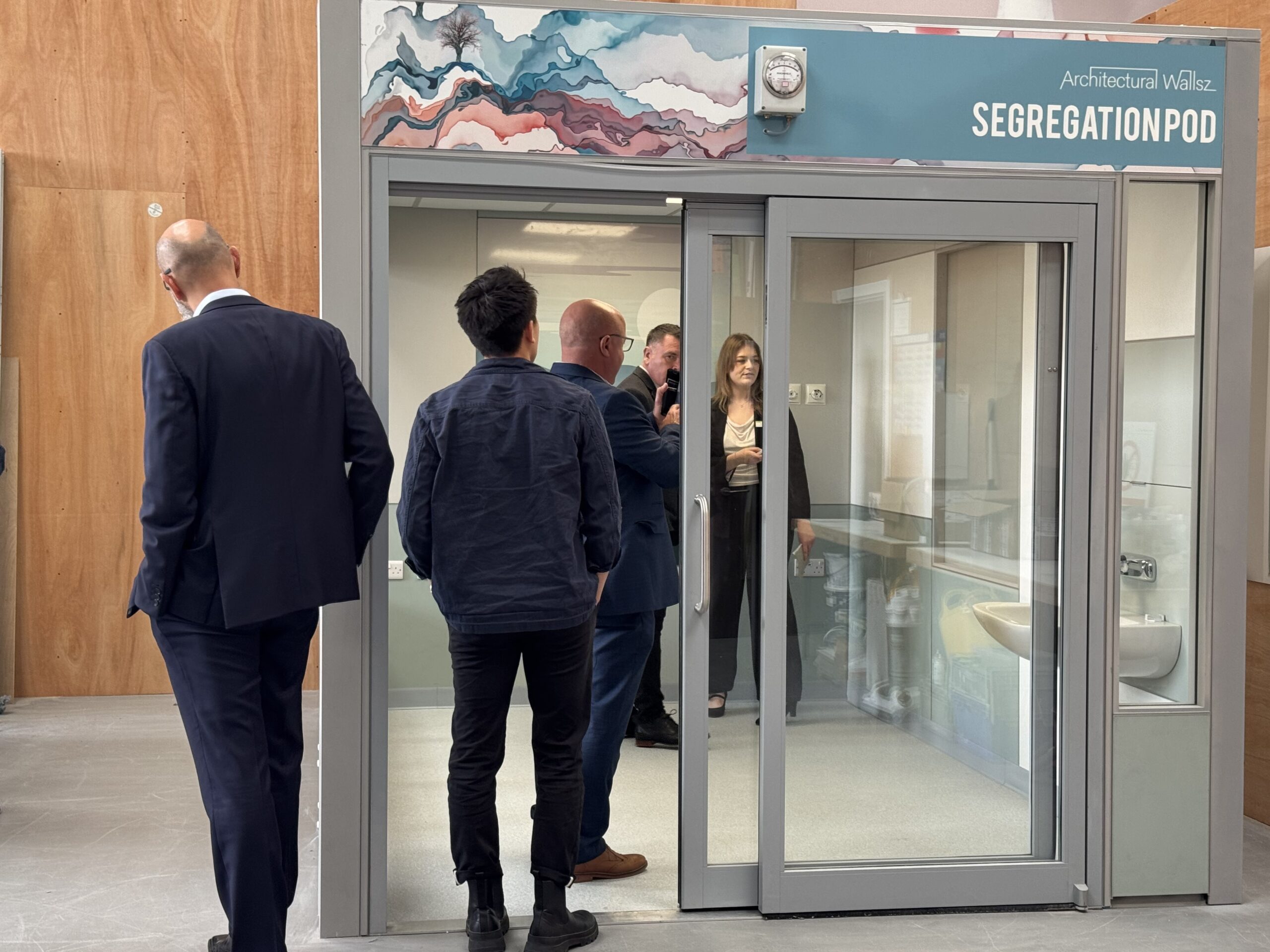
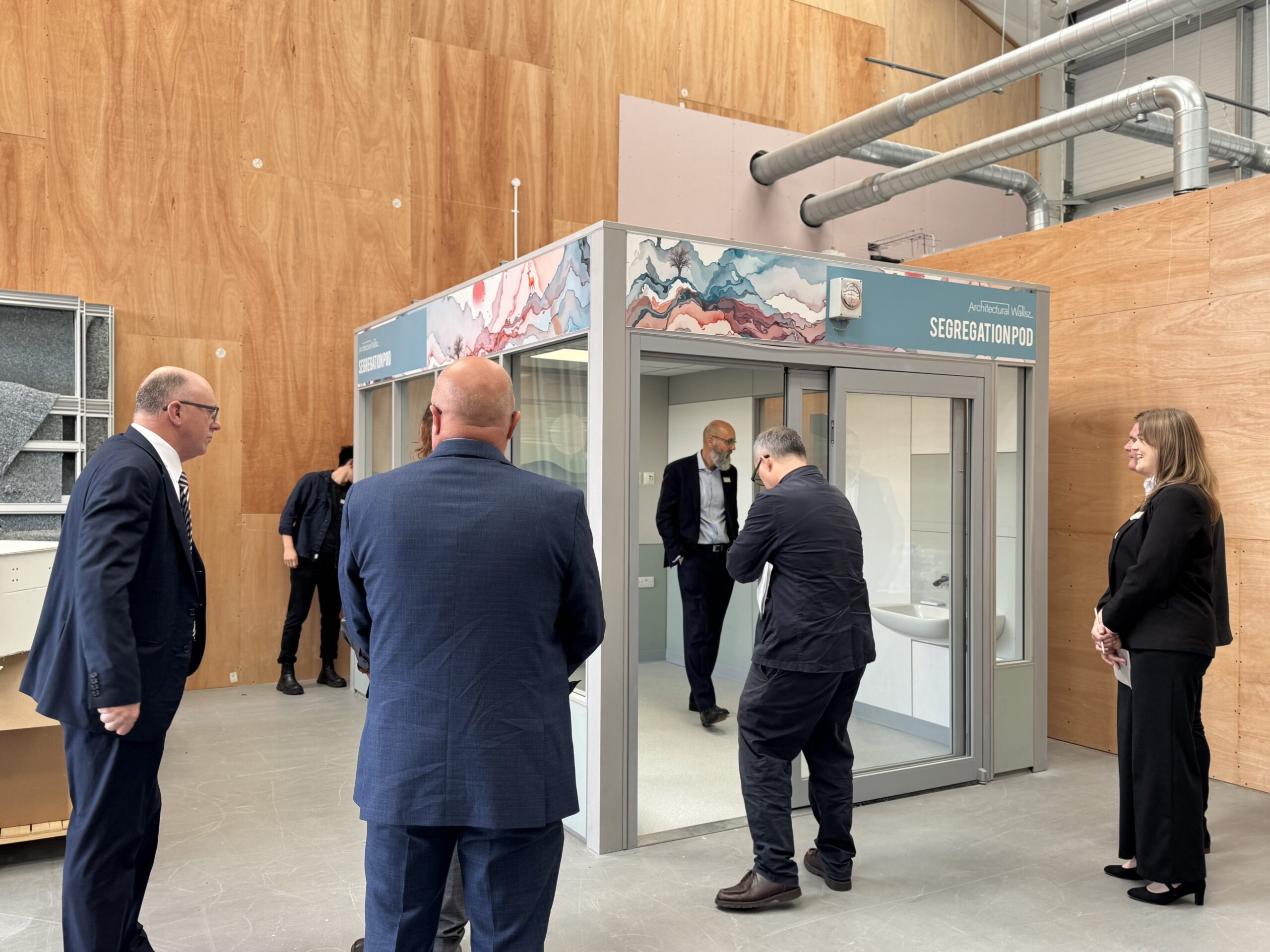
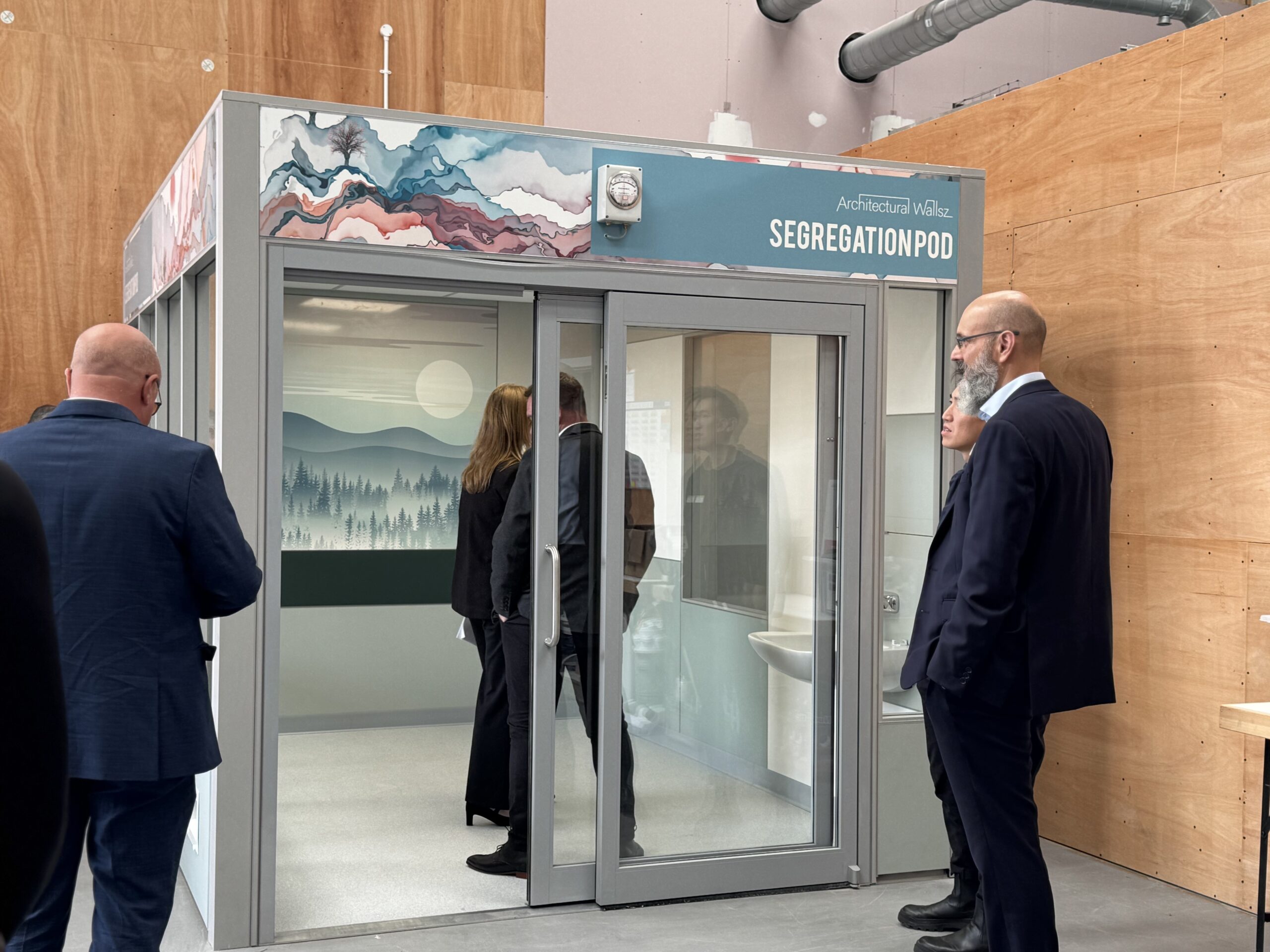
Prefab construction offers a solution to these challenges by moving the bulk of the work off-site. This multi-trade system allows the base building work, MEP and fire safety systems to be completed in an open, empty floorplate, before the walls arrive on site. Integrated systems, such as power, medical gases and technology are pre-installed into the walls, further increasing speed and efficiency on site.
Large, multi-storey facilities can be manufactured in a controlled factory setting in as little as 4 weeks, with on-site installation amounting to a fraction of the time traditionally required with conventional construction methods.
Construction sites are notorious for generating significant amounts of waste. Materials are often cut, sanded and finished on-site, leading to excessive amounts of dust, debris and discarded off-cuts on site. Prefab construction helps minimise waste by manufacturing components in a controlled environment, where materials are used more efficiently and any excess can be recycled or repurposed for future projects.
Not only does prefab construction reduce material waste, it also reduces environmental impact. Pre-finished panels and off-site integrated services mean less dust, fewer volatile organic compound (VOC) emissions and reduced noise pollution, further evidencing the fact that prefab interior construction is the more sustainable option. By minimising on-site activity, prefab projects contribute to cleaner, safer work environments.
Construction sites are high-risk environments where accidents can happen due to the presence of multiple trades, heavy machinery and complex site conditions. With prefab, fewer workers are required on-site which lowers the likelihood of accidents and improves overall safety.
The controlled environment of off-site manufacturing also means fewer variables to manage. The majority of work is carried out in the preconstruction phase, designing the project in collaboration with other stakeholders, to meet the exact parameters of the building. Carrying out this work in the front end ensures the materials are manufactured to erect quickly, cleanly and according to the relevant regulations.
One of the standout benefits of prefab construction is its flexibility. Traditional construction methods are rigid – once a building is complete, any modifications or adaptations often require costly renovations and downtime. In contrast, prefab construction comprises of modular, adaptable solutions that can be reconfigured as needs change.
Prefab materials and components can be repurposed or relocated with minimal disruption. This flexibility makes prefab construction ideal for industries that require frequent updates, such as healthcare, where facilities need to adapt to new technologies and evolving patient needs. Prefab’s ability to grow and change with a project offers a level of flexibility that traditional construction simply can’t match.
Prefab construction has become a smarter and more efficient way to approach interior fit-out projects. By shifting the focus to off-site manufacturing of durable, long-lasting materials, reducing the number of trades needed on-site and minimising waste, prefab construction leads to faster, more cost-effective and sustainable building solutions.
At Architectural Wallsz, we specialise in delivering prefab solutions that meet the demands of modern healthcare spaces. Our prefab construction solutions ensure that your building’s interior is future-proofed and ready for whatever comes next.
Prefab construction is changing the way we build; offering faster, more efficient and cost-effective alternatives to traditional methods. The way we like to characterise this is through a 70/30 split; while traditional construction usually allocates around 70% of a project’s value to labour and 30% on materials, Prefab construction flips this practice, prioritising durable, re-useable materials that are designed to reduce on-site time, labour and waste. The true value of prefab construction lies in how we rethink project efficiency and adaptability.
The shift to future-proof material investment is inherently linked to the focus on off-site manufacturing, which not only reduces labour costs but also increases efficiency across the board. This model is especially valuable for projects that require future flexibility, like healthcare or modular office spaces, where you can re-use and reconfigure materials long after the initial build.
In traditional construction, time and resources are focused on coordinating numerous teams on-site. This method involves the careful planning of multiple, coinciding programmes, and relying heavily on each service team to meet their allotted schedule. This labour-heavy system means trades are working around each other, making multiple trips to complete their work, and are prone to damaging or mishandling others’ materials. The result? On-site material waste increases and projects often go over budget or face delays.
Prefab construction offers a solution to these challenges by moving the bulk of the work off-site. This multi-trade system allows the base building work, MEP and fire safety systems to be completed in an open, empty floorplate, before the walls arrive on site. Integrated systems, such as power, medical gases and technology are pre-installed into the walls, further increasing speed and efficiency on site.
Large, multi-storey facilities can be manufactured in a controlled factory setting in as little as 4 weeks, with on-site installation amounting to a fraction of the time traditionally required with conventional construction methods.
Construction sites are notorious for generating significant amounts of waste. Materials are often cut, sanded and finished on-site, leading to excessive amounts of dust, debris and discarded off-cuts on site. Prefab construction helps minimise waste by manufacturing components in a controlled environment, where materials are used more efficiently and any excess can be recycled or repurposed for future projects.
Not only does prefab construction reduce material waste, it also reduces environmental impact. Pre-finished panels and off-site integrated services mean less dust, fewer volatile organic compound (VOC) emissions and reduced noise pollution, further evidencing the fact that prefab interior construction is the more sustainable option. By minimising on-site activity, prefab projects contribute to cleaner, safer work environments.
Construction sites are high-risk environments where accidents can happen due to the presence of multiple trades, heavy machinery and complex site conditions. With prefab, fewer workers are required on-site which lowers the likelihood of accidents and improves overall safety.
The controlled environment of off-site manufacturing also means fewer variables to manage. The majority of work is carried out in the preconstruction phase, designing the project in collaboration with other stakeholders, to meet the exact parameters of the building. Carrying out this work in the front end ensures the materials are manufactured to erect quickly, cleanly and according to the relevant regulations.
One of the standout benefits of prefab construction is its flexibility. Traditional construction methods are rigid – once a building is complete, any modifications or adaptations often require costly renovations and downtime. In contrast, prefab construction comprises of modular, adaptable solutions that can be reconfigured as needs change.
Prefab materials and components can be repurposed or relocated with minimal disruption. This flexibility makes prefab construction ideal for industries that require frequent updates, such as healthcare, where facilities need to adapt to new technologies and evolving patient needs. Prefab’s ability to grow and change with a project offers a level of flexibility that traditional construction simply can’t match.
Prefab construction has become a smarter and more efficient way to approach interior fit-out projects. By shifting the focus to off-site manufacturing of durable, long-lasting materials, reducing the number of trades needed on-site and minimising waste, prefab construction leads to faster, more cost-effective and sustainable building solutions.
At Architectural Wallsz, we specialise in delivering prefab solutions that meet the demands of modern healthcare spaces. Our prefab construction solutions ensure that your building’s interior is future-proofed and ready for whatever comes next.











We often send out our newsletter with news and great offers. We will never disclose your data to third parties and you can unsubscribe from the newsletter at any time.
Unfortunately, we’re unable to offer free samples. As a retailer, we buy all magazines from their publishers at the regular trade price. However, you could contact the magazine’s publisher directly to ask if they can send you a free copy.
You can create a new account at the end of the order process or on the following page. You can view all of your orders and subscriptions in your customer account. You can also change your addresses and your password.
No, you don’t have to create an account. But there are a few advantages if you create an account.
You never have to enter your billing and shipping address again
Find all of your orders, subscriptions and addresses in your account
Download invoices of your orders
No, we don’t have a physical store location at the moment. We accept only orders through our online shop and we’re shipping all orders with the Swiss Post Service. Please visit our shipping section for more details.
From time to time you will find us at design fairs and popup markets in Switzerland. Subscribe to our newsletter and you’ll receive the latest news.