
Designing healthcare real estate to meet anticipated demand is challenging enough, but there is another crucial element to futureproofing: building in adaptability to handle the unexpected.
Given the uncertainty about future requirements, it makes sense to construct and fit out new hospitals in ways that can adapt to changing needs and demands, anticipated or otherwise.
While modular construction is on the NHS radar, largely because it offers greater adaptability than conventional construction, that is typically in the context of building new hospitals or extending current ones, rather than reconfiguring existing spaces.
So, what if there was a way to repurpose clinical space and other areas on hospital estates to accommodate the health needs of the future, and to do so again and again? The answer is surprisingly simple. It’s a standard practice in corporate real estate in the UK and around the world, and is increasingly utilised in the health sector, especially in North America.
Prefabricated rooms and partitions, manufactured off-site, are a wonderfully efficient way to ensure that, when change comes, hospitals can adapt.
Not only are they endlessly adaptable, but they also deliver huge benefits that align with core NHS and private healthcare objectives, from sustainability to energy efficiency.
As the New Hospital Programme rolls out, building in adaptability both inside and out makes sense.
The COVID-19 pandemic profoundly reshaped daily life. Within healthcare, the impact was even more acute. Systems were pushed to their limits, exposing long-standing capacity constraints.
As hospitals had to reconfigure services almost overnight, the pandemic highlighted the critical importance of resilient infrastructure and workforce flexibility, fundamentally shifting expectations of how healthcare systems should operate in both crisis and normal conditions.
Memories of COVID may be fading in the general populace, but the health service must remember to expect the unexpected.
A meningitis cluster in Kent saw 20 laboratory-confirmed cases, with two notifications under review. All 22 needed hospital treatment, nine in intensive care, and two young people died.
Centred on a nightclub in Canterbury, the outbreak rewrote the rule book on meningitis, showing how unpredictable infectious diseases can be.
There are numerous touchpoints where clinical space and other physical facilities are put under strain by big spikes in demand, and where real estate might need to be adapted, including:
The Kent case is an example that reinforces the need for flexible infrastructure strategies.
In a healthcare system facing shifting demographics, technological change and fluctuating demand, flexibility is invaluable.
It is perhaps the most compelling argument in favour of modular construction, allowing buildings to be expanded, reconfigured or relocated as service needs evolve.
Hospitals can add capacity incrementally with new wards, diagnostic hubs or outpatient facilities without committing to large, inflexible capital projects.
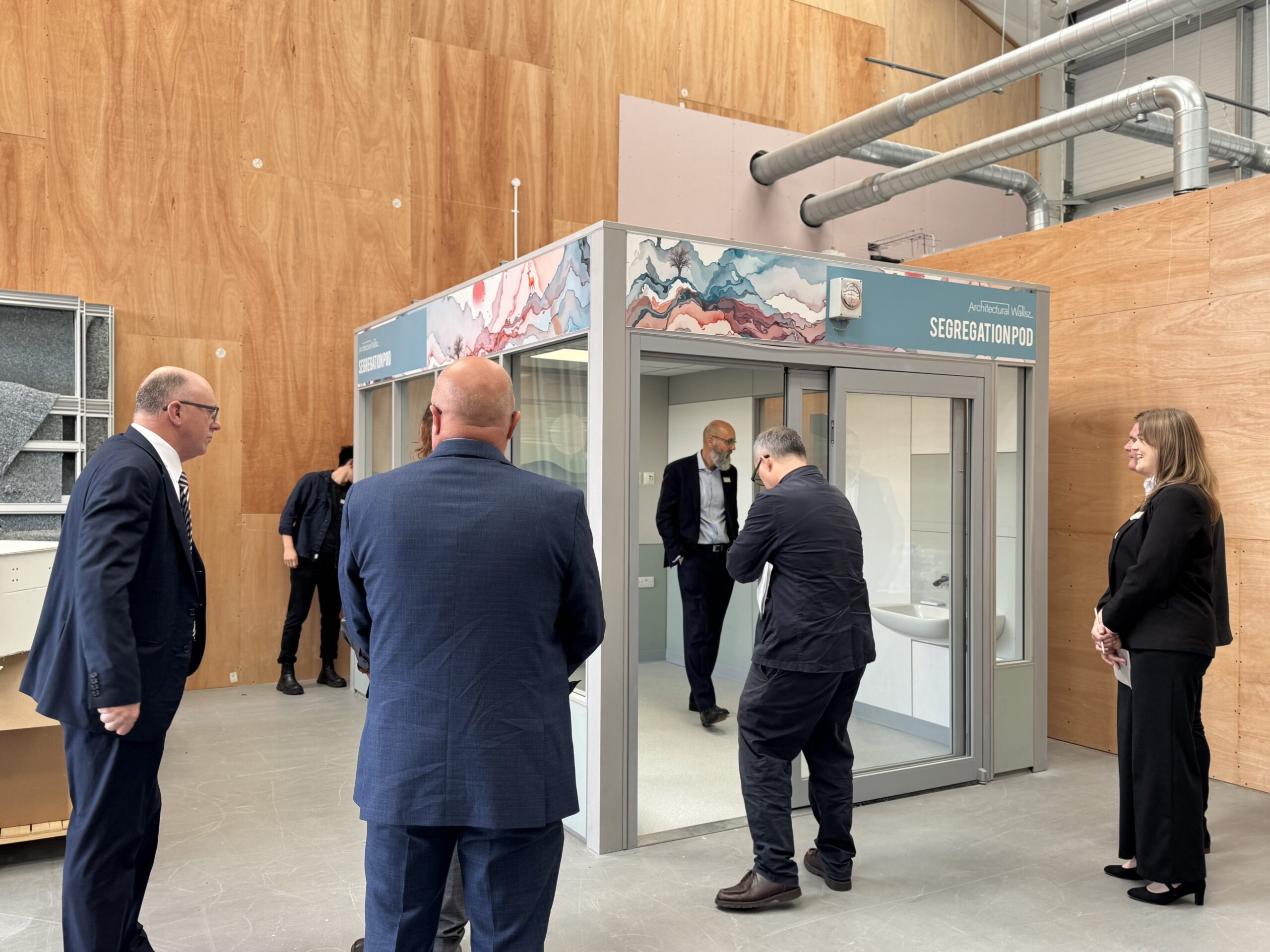
If those buildings are fitted out in modular ways, for example, with movable walls or self-contained isolation units, they can also be reconfigured or completely repurposed.
This aligns closely with emerging models of care, including community diagnostics and decentralised services.
Beyond flexibility, modular solutions offer new ways for the NHS to meet its sustainability targets.
Modular construction offers significant environmental benefits. Off-site manufacturing reduces waste and can cut greenhouse gas emissions by half compared to traditional construction. Combined with shorter programmes and lower labour costs, this contributes to improved whole-life value, an increasingly important factor given NHS capital constraints.
Despite these advantages, modular construction is not yet being fully leveraged in the UK’s New Hospital Programme (NHP).
Although NHS England now requires schemes to demonstrate high levels of MMC, in practice, many projects default to conventional ‘stick‑built’ construction models.
When it comes to fitting out new or existing buildings, the NHS could be making more use of innovative modular solutions that are already widely used in North America and increasingly in the UK private health sector.
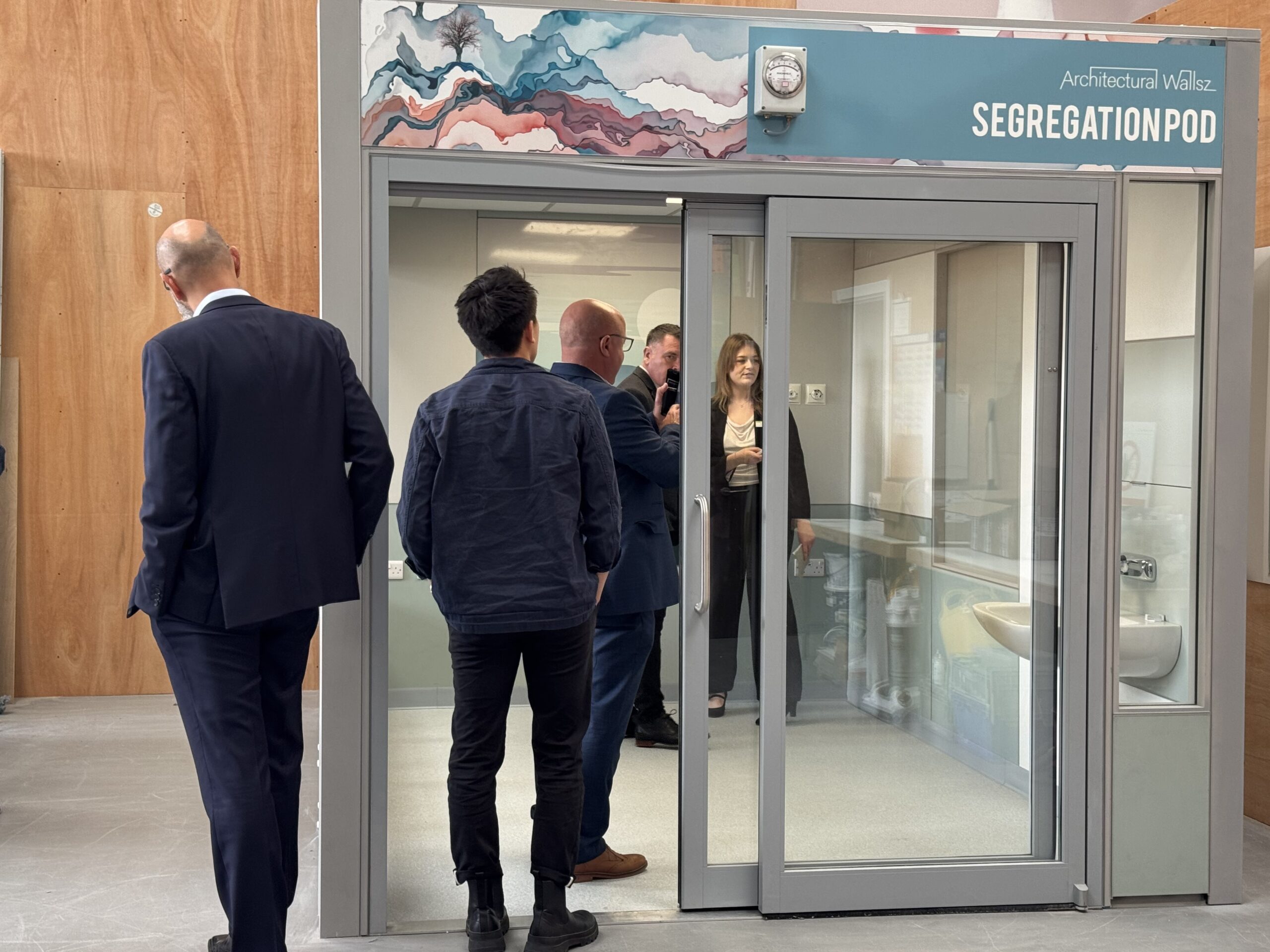
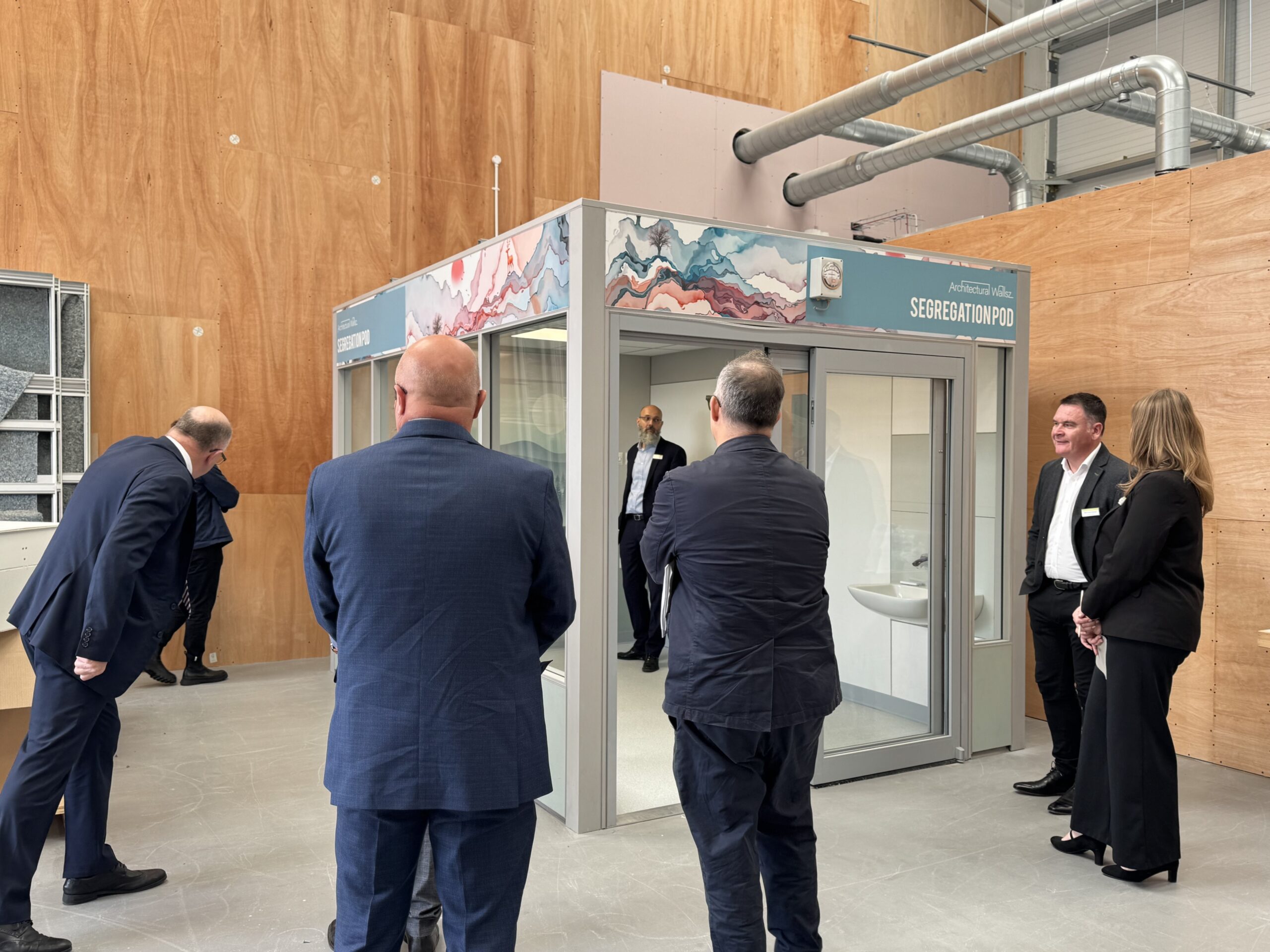
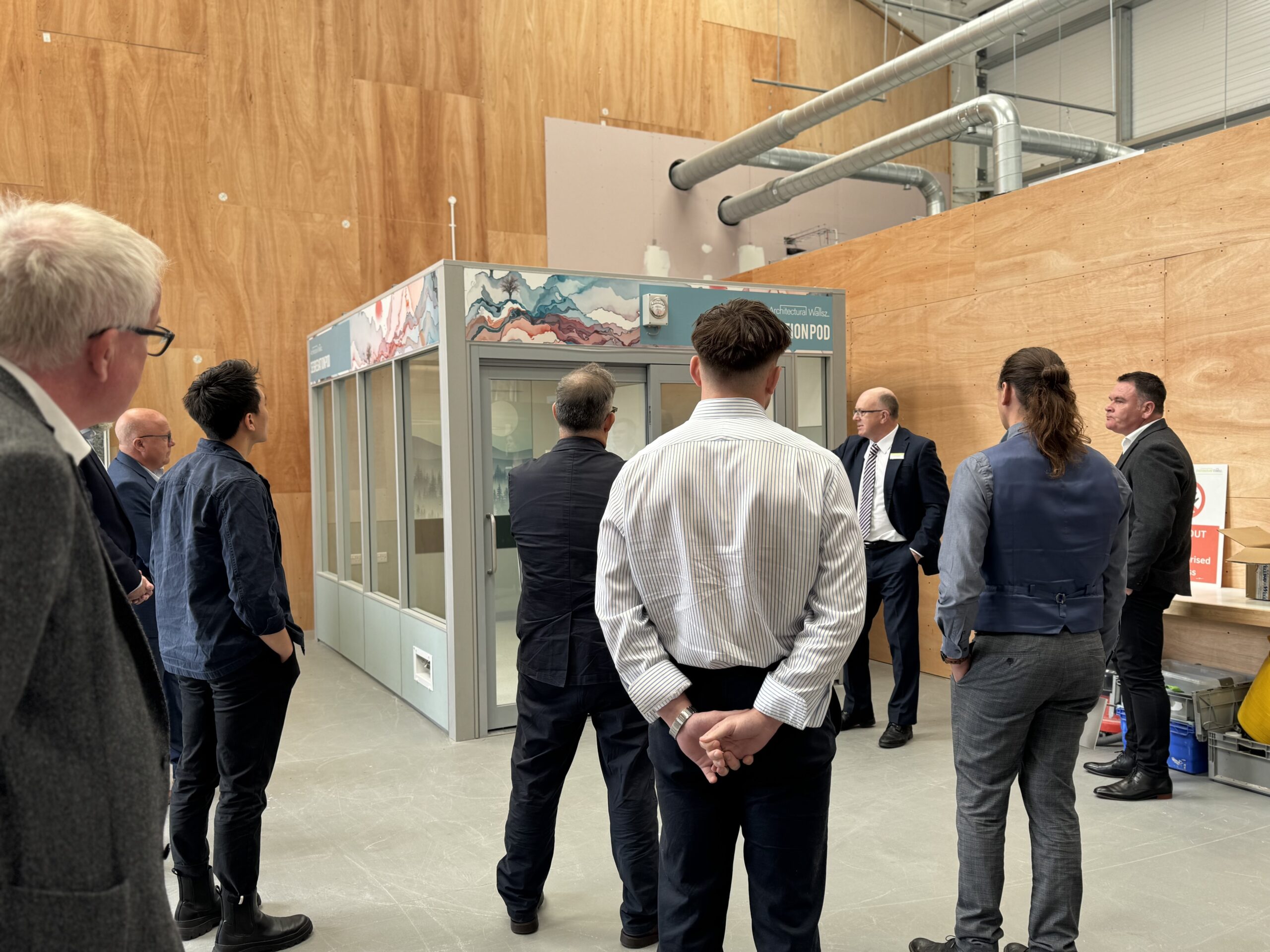
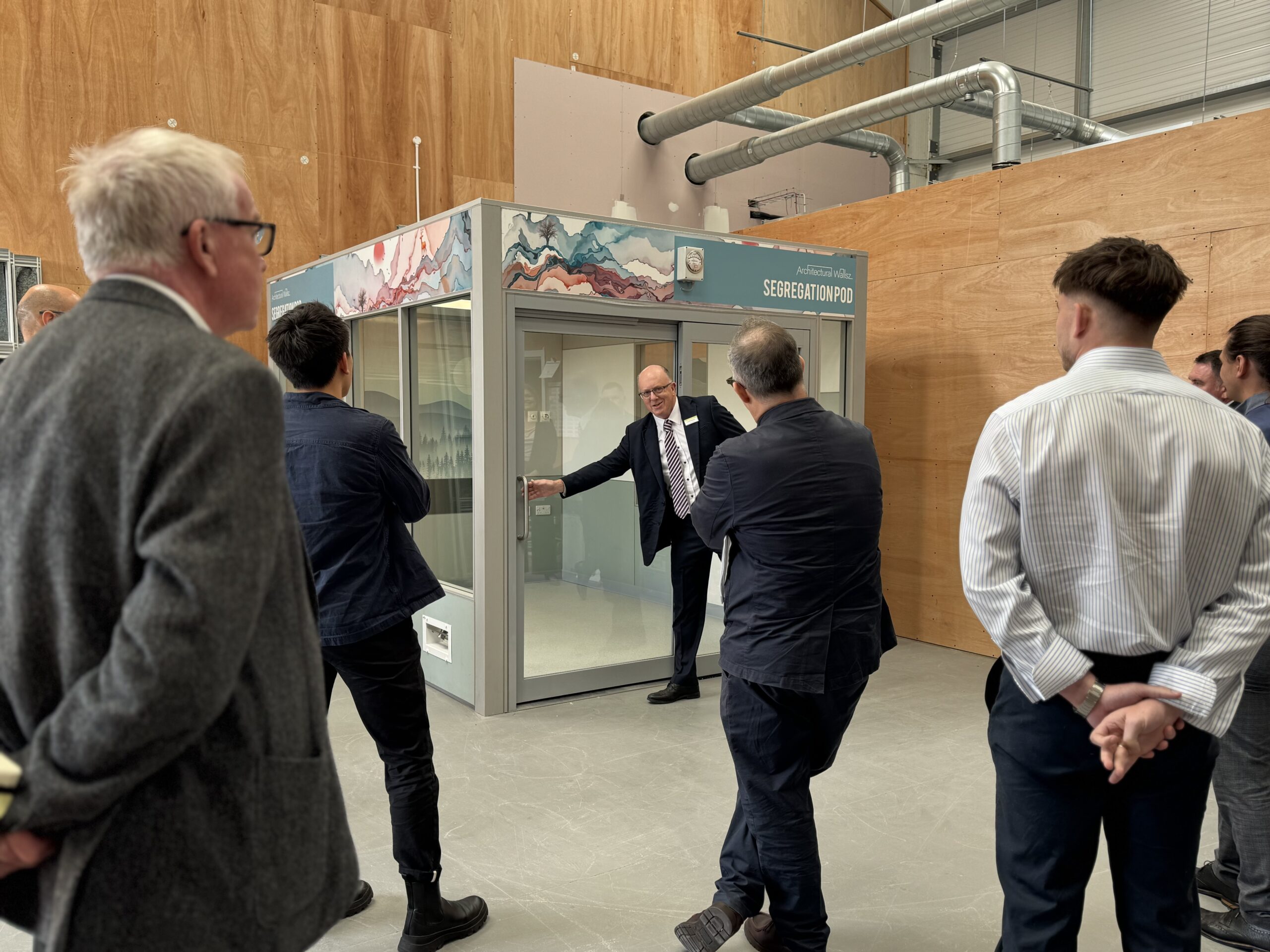
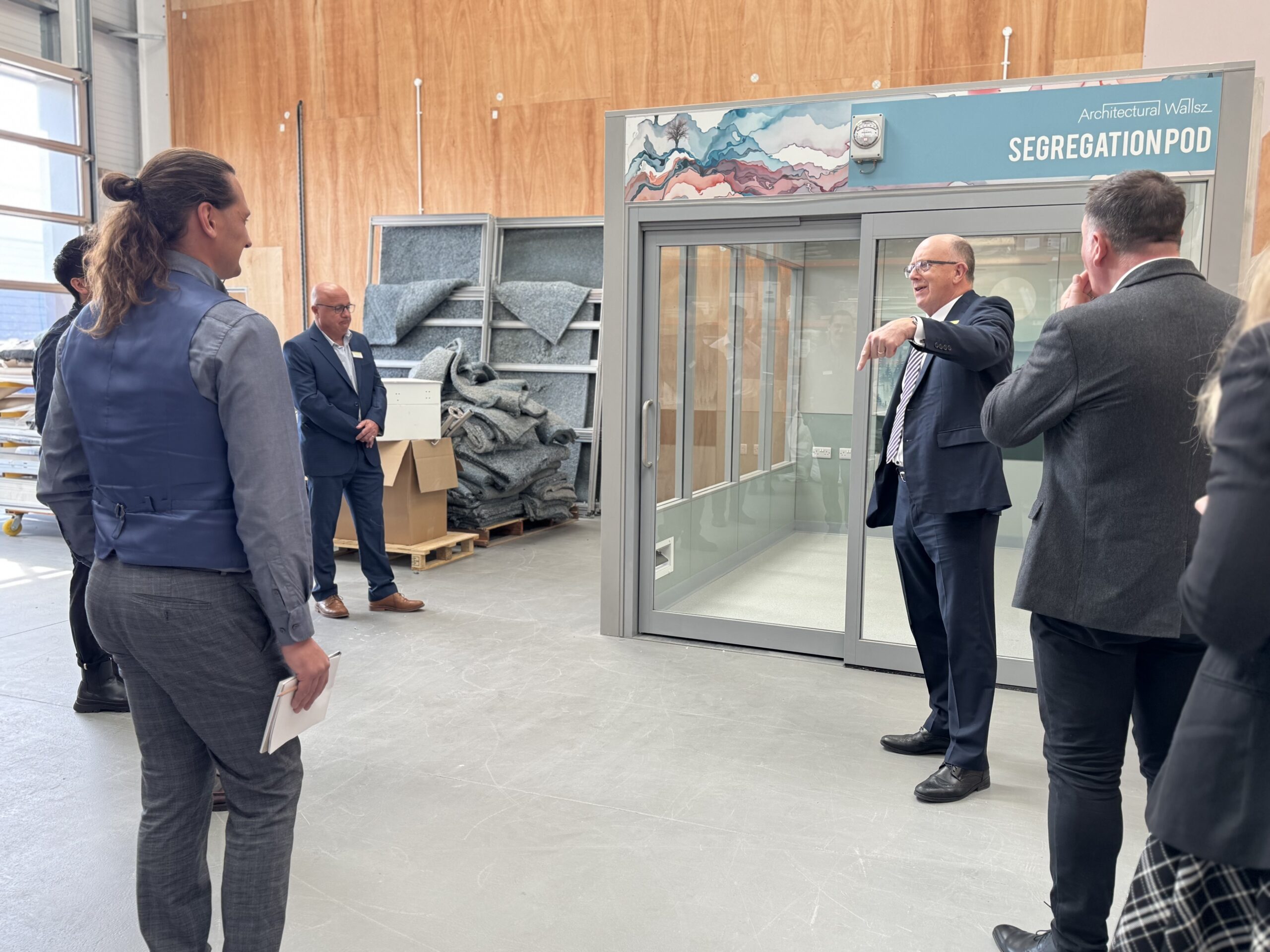
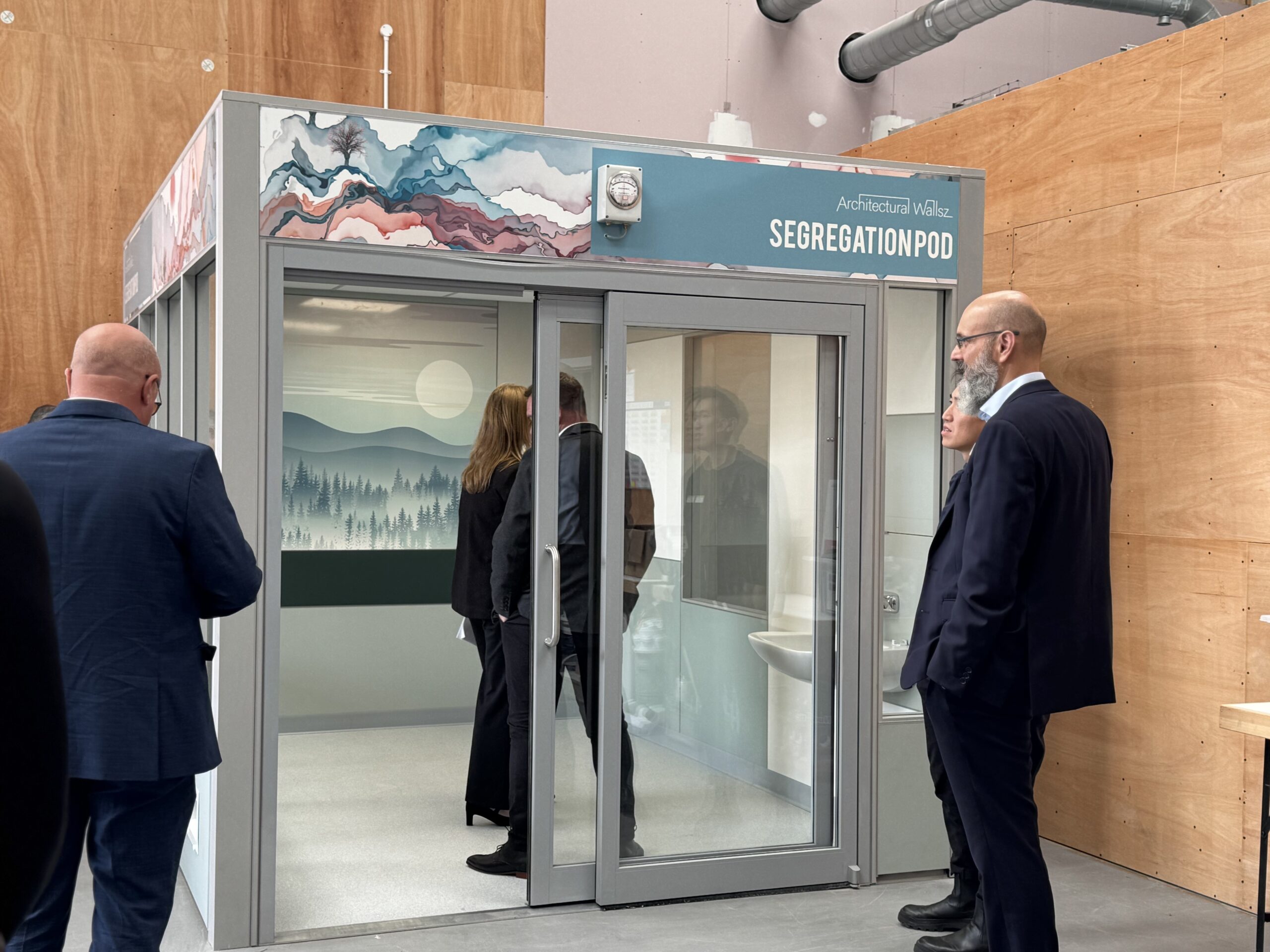
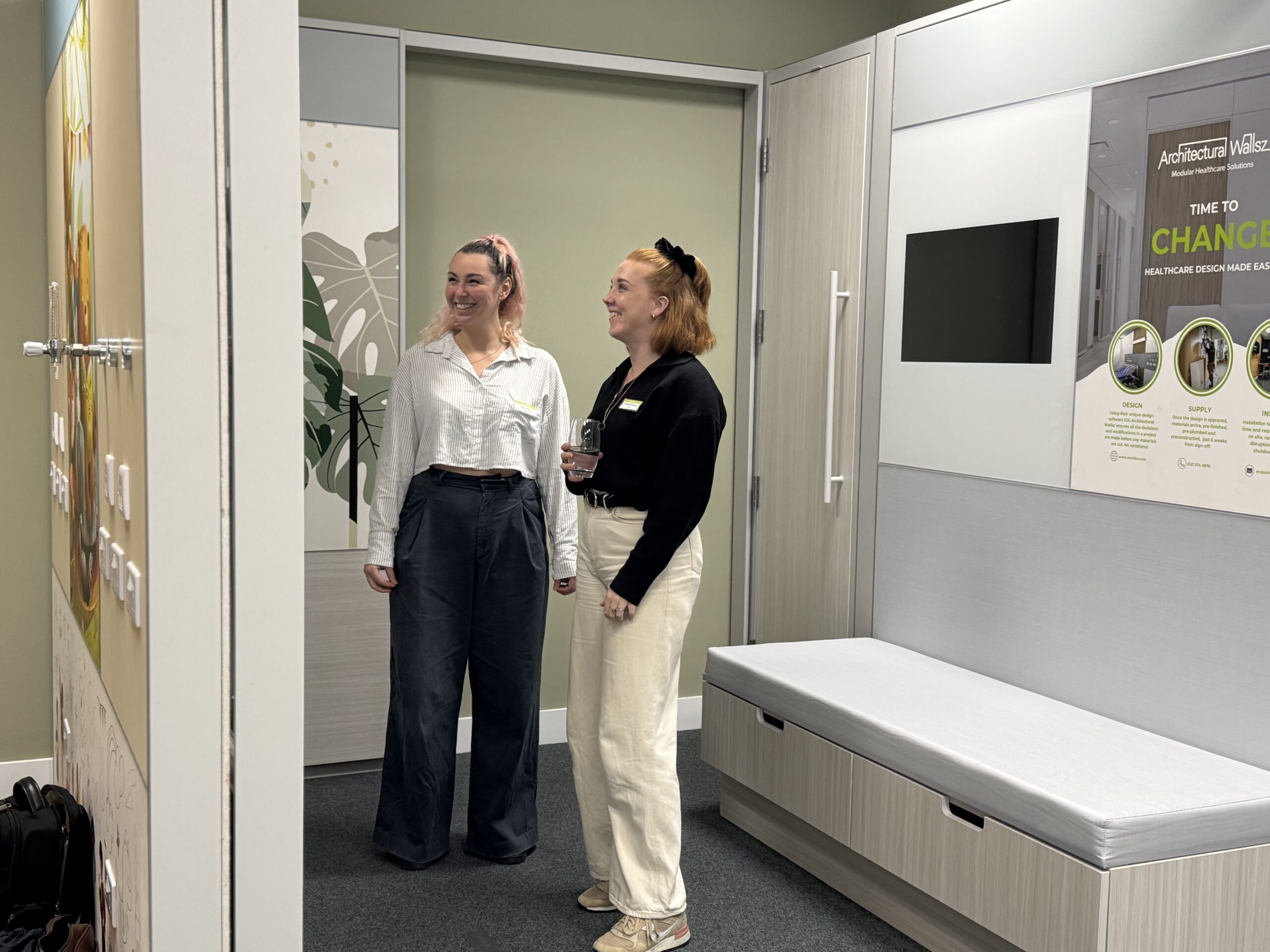
As a specialist provider, Architectural Wallsz offers a range of prefabricated segregation and isolation pods, healthcare consulting rooms, medical headwalls, modular sink wall units, nurses’ stations, and healthcare study pods.
Its self-contained vertical A&E examination room, known as Cove, has won multiple awards. Pre-equipped with the tools needed for medical exams, it enhances efficiency by ensuring everything required for patient care is at the health professional’s fingertips.
At a third the size of a typical examination room, it is a low-acuity treatment area which increases capacity and integrates easily into existing spaces with quick installation and minimal disruption.
Architectural Wallsz solutions are designed to meet stringent health technical memoranda (HTM) and health building note (HBN) standards. Because they are designed for disassembly, they help to promote a circular economy and significantly reduce waste.
Factory-controlled manufacturing improves consistency, reduces defects and enhances infection control.
For the NHP, these systems offer main contractors a new way to support the programme’s Hospitals 2.0 strand.
Refitting space in the health estate doesn’t have to be confined to hospitals. Admin areas can be repurposed as clinical spaces or reconfigured to make them more efficient – moving from one-person-one-desk to hot desking or replacing under-utilised meeting rooms with smaller meeting spaces, for example.
Once again, a modular approach pays dividends.
To see modular-based adaptability in practice, consider this case study in a corporate office scenario.
Architectural Wallsz reconfigured a leading bank’s London offices using its DIRTT prefabricated system. Not only did this deliver complete design freedom to transform the layout and functionality of the space, but it also meant no existing partitions went to landfill.
Initially, multiple individual offices with hanging cabinets, whiteboard surfaces, and fabric tiles were installed, featuring advanced acoustics to enhance privacy. Since then, the system has allowed the bank to change the floor plan again over three floors, move meeting rooms, and increase or decrease office space five times, all using existing prefabricated materials.
Modular and prefabricated design can be used to deliver high-quality clinical spaces faster with greater flexibility and far less disruption than traditionalbuilds and refits. The question now isn’t whether it works, but how quickly it can scale.
If the New Hospital Programme fully commits to modular inside and out, it would redefine how healthcare infrastructure is delivered in the UK. The prize is a shift to a faster, more agile system built to meet the demands of current and future healthcare, whatever the future holds.
Designing healthcare real estate to meet anticipated demand is challenging enough, but there is another crucial element to futureproofing: building in adaptability to handle the unexpected.
Given the uncertainty about future requirements, it makes sense to construct and fit out new hospitals in ways that can adapt to changing needs and demands, anticipated or otherwise.
While modular construction is on the NHS radar, largely because it offers greater adaptability than conventional construction, that is typically in the context of building new hospitals or extending current ones, rather than reconfiguring existing spaces.
So, what if there was a way to repurpose clinical space and other areas on hospital estates to accommodate the health needs of the future, and to do so again and again? The answer is surprisingly simple. It’s a standard practice in corporate real estate in the UK and around the world, and is increasingly utilised in the health sector, especially in North America.
Prefabricated rooms and partitions, manufactured off-site, are a wonderfully efficient way to ensure that, when change comes, hospitals can adapt.
Not only are they endlessly adaptable, but they also deliver huge benefits that align with core NHS and private healthcare objectives, from sustainability to energy efficiency.
As the New Hospital Programme rolls out, building in adaptability both inside and out makes sense.
The COVID-19 pandemic profoundly reshaped daily life. Within healthcare, the impact was even more acute. Systems were pushed to their limits, exposing long-standing capacity constraints.
As hospitals had to reconfigure services almost overnight, the pandemic highlighted the critical importance of resilient infrastructure and workforce flexibility, fundamentally shifting expectations of how healthcare systems should operate in both crisis and normal conditions.
Memories of COVID may be fading in the general populace, but the health service must remember to expect the unexpected.
A meningitis cluster in Kent saw 20 laboratory-confirmed cases, with two notifications under review. All 22 needed hospital treatment, nine in intensive care, and two young people died.
Centred on a nightclub in Canterbury, the outbreak rewrote the rule book on meningitis, showing how unpredictable infectious diseases can be.
There are numerous touchpoints where clinical space and other physical facilities are put under strain by big spikes in demand, and where real estate might need to be adapted, including:
The Kent case is an example that reinforces the need for flexible infrastructure strategies.
In a healthcare system facing shifting demographics, technological change and fluctuating demand, flexibility is invaluable.
It is perhaps the most compelling argument in favour of modular construction, allowing buildings to be expanded, reconfigured or relocated as service needs evolve.
Hospitals can add capacity incrementally with new wards, diagnostic hubs or outpatient facilities without committing to large, inflexible capital projects.
If those buildings are fitted out in modular ways, for example, with movable walls or self-contained isolation units, they can also be reconfigured or completely repurposed.
This aligns closely with emerging models of care, including community diagnostics and decentralised services.
Beyond flexibility, modular solutions offer new ways for the NHS to meet its sustainability targets.
Modular construction offers significant environmental benefits. Off-site manufacturing reduces waste and can cut greenhouse gas emissions by half compared to traditional construction. Combined with shorter programmes and lower labour costs, this contributes to improved whole-life value, an increasingly important factor given NHS capital constraints.
Despite these advantages, modular construction is not yet being fully leveraged in the UK’s New Hospital Programme (NHP).
Although NHS England now requires schemes to demonstrate high levels of MMC, in practice, many projects default to conventional ‘stick‑built’ construction models.
When it comes to fitting out new or existing buildings, the NHS could be making more use of innovative modular solutions that are already widely used in North America and increasingly in the UK private health sector.
As a specialist provider, Architectural Wallsz offers a range of prefabricated segregation and isolation pods, healthcare consulting rooms, medical headwalls, modular sink wall units, nurses’ stations, and healthcare study pods.
Its self-contained vertical A&E examination room, known as Cove, has won multiple awards. Pre-equipped with the tools needed for medical exams, it enhances efficiency by ensuring everything required for patient care is at the health professional’s fingertips.
At a third the size of a typical examination room, it is a low-acuity treatment area which increases capacity and integrates easily into existing spaces with quick installation and minimal disruption.
Architectural Wallsz solutions are designed to meet stringent health technical memoranda (HTM) and health building note (HBN) standards. Because they are designed for disassembly, they help to promote a circular economy and significantly reduce waste.
Factory-controlled manufacturing improves consistency, reduces defects and enhances infection control.
For the NHP, these systems offer main contractors a new way to support the programme’s Hospitals 2.0 strand.
Refitting space in the health estate doesn’t have to be confined to hospitals. Admin areas can be repurposed as clinical spaces or reconfigured to make them more efficient – moving from one-person-one-desk to hot desking or replacing under-utilised meeting rooms with smaller meeting spaces, for example.
Once again, a modular approach pays dividends.
To see modular-based adaptability in practice, consider this case study in a corporate office scenario.
Architectural Wallsz reconfigured a leading bank’s London offices using its DIRTT prefabricated system. Not only did this deliver complete design freedom to transform the layout and functionality of the space, but it also meant no existing partitions went to landfill.
Initially, multiple individual offices with hanging cabinets, whiteboard surfaces, and fabric tiles were installed, featuring advanced acoustics to enhance privacy. Since then, the system has allowed the bank to change the floor plan again over three floors, move meeting rooms, and increase or decrease office space five times, all using existing prefabricated materials.
Modular and prefabricated design can be used to deliver high-quality clinical spaces faster with greater flexibility and far less disruption than traditionalbuilds and refits. The question now isn’t whether it works, but how quickly it can scale.
If the New Hospital Programme fully commits to modular inside and out, it would redefine how healthcare infrastructure is delivered in the UK. The prize is a shift to a faster, more agile system built to meet the demands of current and future healthcare, whatever the future holds.



























We often send out our newsletter with news and great offers. We will never disclose your data to third parties and you can unsubscribe from the newsletter at any time.
Unfortunately, we’re unable to offer free samples. As a retailer, we buy all magazines from their publishers at the regular trade price. However, you could contact the magazine’s publisher directly to ask if they can send you a free copy.
You can create a new account at the end of the order process or on the following page. You can view all of your orders and subscriptions in your customer account. You can also change your addresses and your password.
No, you don’t have to create an account. But there are a few advantages if you create an account.
You never have to enter your billing and shipping address again
Find all of your orders, subscriptions and addresses in your account
Download invoices of your orders
No, we don’t have a physical store location at the moment. We accept only orders through our online shop and we’re shipping all orders with the Swiss Post Service. Please visit our shipping section for more details.
From time to time you will find us at design fairs and popup markets in Switzerland. Subscribe to our newsletter and you’ll receive the latest news.